
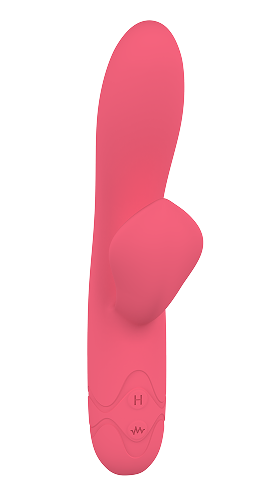


How to Make a Vibrator Quieter
Not everyone is ready to replace their current toy with a quieter model, and that's fair, sometimes you just need to work with what you already have. The good news is that sound isn't only determined by the motor inside your vibrator. A few small, practical changes can meaningfully cut down on how much noise actually escapes the room, even with a toy that wasn't built with discretion in mind.

Change What It's Touching
This is the single biggest factor most people overlook. Vibration travels through hard surfaces far more efficiently than through soft ones, so a toy resting on a wooden nightstand, hollow bed frame, or hardwood floor will sound noticeably louder than the exact same toy held in your hand or cushioned against bedding. If you're using it against a mattress, avoid letting it press directly against the headboard or wall, since that's often where sound transmission spikes the most.
Add a Soft Barrier
A folded towel, a pillow, or even a thick blanket underneath or around the toy can absorb a surprising amount of vibration before it has the chance to travel. This works because soft materials dampen the physical vibration itself, rather than just muffling the airborne sound, which is a meaningfully different (and more effective) kind of noise reduction.
Use Background Noise Strategically
Music, a fan, or a white noise machine won't eliminate sound, but they raise the ambient noise floor of the room, which makes it harder for a lower-volume buzz to stand out. Think of this as a buffer rather than a fix on its own, it works best layered on top of the other adjustments here, not as a replacement for them.

Lower Speeds Aren't Just About Sensation
Most vibrators get audibly louder as speed increases, since higher RPM motors generate more mechanical noise along with more sensation. If discretion matters more than intensity in a given moment, starting at a lower speed and building up gradually can keep things quieter for longer, even if it's not always your instinct.
Know When a Toy Is Working Against You
Some vibrators are simply louder by design, no amount of towels or background noise will fully compensate for a toy that vibrates against a thin, hollow plastic shell with an exposed motor. If you're constantly troubleshooting sound with a specific toy, that's usually a sign the toy itself is the limiting factor rather than your technique. We explain exactly why some products are inherently louder than others in why some vibrators are so much quieter than others, which is worth reading if you're weighing whether to upgrade.
It also helps to understand your actual baseline. Standard vibrators typically run 60 to 75 decibels, while genuinely quiet ones sit closer to 40 to 50, a gap we break down in more detail in how loud the average vibrator actually is.

The Bottom Line
These adjustments can genuinely help, especially in combination, but they have limits. If you've tried all of the above and sound is still a recurring source of stress, it's usually more effective, and more relaxing long-term, to invest in a toy engineered for quiet from the ground up. Our complete guide to silent vibrators is a good next stop if you're at that point, and if shared walls are part of the equation, can someone hear a vibrator through a wall covers what's realistically at risk.
Shop the Hush Collection
 HushBullet™ |
 HushRabbit™ |
 HushGSpot™ |