
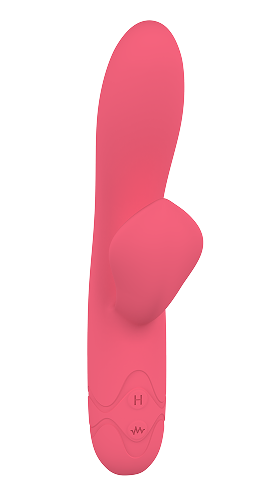


The Complete Guide to Silent Vibrators
Quick answer: A silent vibrator, in the strictest sense, doesn't exist — every motorized toy produces some sound. But "silent" vibrators (more accurately called quiet or whisper-quiet vibrators) use enclosed, cushioned motors and lower-decibel settings to keep noise around 40–50 decibels, roughly the volume of a quiet conversation or a running refrigerator. The quietest options are typically compact bullet vibrators and body-safe silicone toys with sealed motor housings, while wand vibrators and older plastic toys tend to be the loudest. Below, we break down exactly what makes a vibrator quiet, the science behind it, which type fits your situation, and how to test noise level before you buy.
Why "Silent" Isn't Really Silent — And Why That's Okay
If you've searched for a "100% silent vibrator," you've probably noticed something frustrating: every product still lists a decibel range. That's because vibration inherently creates sound — the motor spins, the casing resonates, and that vibration transfers into whatever surface the toy is touching. Manufacturers can't eliminate this entirely, but they can reduce it dramatically through design choices like motor placement, casing material, and insulation.

What people actually mean by "silent" is discreet — quiet enough that it won't be heard through a closed door, over a TV, or by someone in the next room. That's a realistic and achievable standard, and it's the one we'll use throughout this guide. It's also worth separating two different ideas that often get lumped together: loudness (how much energy the sound carries) and audibility through a barrier (how much of that sound actually reaches a listener on the other side of a wall or door). A toy can be moderately loud up close but nearly inaudible a room away, depending on frequency — which is exactly why decibel numbers alone don't tell the whole story.
What Actually Makes a Vibrator Quiet?
Noise level comes down to four main factors:
- Motor type and placement. Toys with the motor fully enclosed in a padded chamber (rather than sitting loosely against a hard shell) transfer far less buzzing sound outward.
- Casing material. Silicone naturally dampens vibration and sound better than hard plastic or ABS, which tends to amplify motor buzz like a tiny speaker cone.
- Speed and intensity settings. Lower intensity settings are almost always quieter — if discretion matters more than power, look for toys with a wide range of low-intensity settings rather than ones that jump straight to high.
- Surface contact. A vibrator held against skin is quieter than one resting on a hard nightstand or bed frame, which can vibrate and amplify sound. This is more about usage than the product itself, but it matters just as much.
There's a fifth factor people rarely think about: frequency, not just volume. Human hearing is more sensitive to some pitches than others, and a high-pitched buzz tends to cut through background noise (like a TV or fan) far more noticeably than a low, dull hum at the same decibel level. This is why two toys can measure similarly on a decibel meter yet feel completely different in how "noticeable" they are in a quiet room — the one with a deeper, lower-pitched motor sound will almost always feel more discreet in practice.

Understanding Decibels: How Loud Is "Loud," Really?
Decibel numbers are easy to skim past without context, so here's what they actually mean in everyday terms:
| Sound | Approximate dB |
|---|---|
| Quiet whisper | 20–30 dB |
| Quiet library | 30–40 dB |
| Quiet vibrator on low | 40–50 dB |
| Normal conversation | 50–60 dB |
| Running refrigerator | ~50 dB |
| Louder vibrator on high | 55–65 dB |
| Vacuum cleaner | 70–80 dB |
The scale itself is logarithmic, which means a jump of 10 dB isn't a small step — it represents roughly a doubling in perceived loudness. So the difference between a 45 dB toy and a 60 dB toy isn't subtle; it's the difference between something that blends into background noise and something that's genuinely noticeable across a room.
This is also why two products that look nearly identical in a spec sheet can feel very different in practice. A toy listed at "45–55 dB" is really describing a range across its lowest and highest settings, not one fixed number — so it's worth checking whether a brand is quoting noise on low, medium, or high, since that context changes what the number actually tells you. A quiet vibrator on its highest setting can easily land in the same range as a mid-range toy on its lowest, which is part of why decibel numbers alone shouldn't be the only thing you rely on when comparing products.
How Sound Changes With Distance and Barriers
A decibel rating measured at the source doesn't tell you what someone in another room will actually hear, because sound loses energy as it travels and loses even more when it has to pass through a solid barrier. As a rough guide: a standard interior drywall door can reduce sound by roughly 15–20 dB, and a closed solid-core door plus a few feet of open-air distance can bring a 50 dB source down into the range of background silence for most listeners.

This is why a moderately quiet toy used with the door closed can often be more discreet in practice than a genuinely ultra-quiet toy used with the door open — distance and barriers do a lot of the work. It's also why hollow interior doors (common in apartments and older homes) offer noticeably less sound isolation than solid ones, and why the type of door in your specific space matters as much as the toy's spec sheet.
How HushVibes Solves the Noise Problem: HushTech™ Acoustics
Most brands treat quiet as an afterthought — a side effect of whatever motor happened to be cheapest to source. HushVibes built its entire product line around the opposite approach. Every HushVibes vibrator is engineered around proprietary HushTech™ acoustic baffling, a motor-enclosure system designed specifically to convert high-pitched buzzing into deep, sub-audible vibration before it ever leaves the device.
In practice, this means the difference between a typical bullet vibrator (which relies on a bare motor sitting against thin plastic) and the HushBullet™, which houses its motor inside acoustic-dampening chambers purpose-built to trap sound rather than let it resonate outward. The result is a toy that can run at real, satisfying intensity without broadcasting that intensity to the rest of the room.
This is also why HushVibes uses medical-grade silicone across its entire line rather than hard ABS plastic shells: silicone doesn't just feel better against skin, it physically absorbs vibration instead of amplifying it — reinforcing the HushTech™ system rather than working against it. And because HushTech™ specifically targets the higher-pitched frequencies human ears pick up on most easily (the "fifth factor" mentioned above), HushVibes toys tend to feel quieter than their raw decibel number alone would suggest.

HushBullet™
The ultra-quiet bullet vibrator that packs a punch without a peep. Sub-audible HushTech™ acoustics, 5 precise speeds, and seamless medical-grade silicone in a travel-friendly size.
Shop the HushBullet™Quietest Vibrator Types, Ranked
| Type | Typical Noise Level | Why |
|---|---|---|
| Bullet vibrators | ~40–50 dB | Small, sealed motors with minimal casing surface area to resonate |
| Silicone body-safe vibrators | ~45–55 dB | Silicone dampens sound better than hard plastic shells |
| Rabbit-style vibrators | ~50–60 dB | Dual motors and larger casings increase resonance |
| Wand vibrators | ~55–65 dB | Powerful motors designed for intensity, not discretion, in a large head |
| Older/plastic novelty toys | 60+ dB | Hard, hollow casings amplify motor buzz significantly |
For reference, 40–50 dB is comparable to a quiet library or a soft conversation; 60+ dB starts to approach normal speaking volume, which is far more likely to travel through walls or doors.
Every HushVibes vibrator — the HushBullet™, HushRabbit™, and HushGSpot™ alike — is engineered to sit at the quiet end of its category rather than the average, thanks to HushTech™ acoustic baffling. Even the HushRabbit™, a dual-motor rabbit-style toy (a category that's typically one of the louder ones on the market), is built to stay meaningfully quieter than comparable dual-motor toys without HushTech™.

The Science Behind Motor Design and Sound
It helps to understand what's actually happening mechanically. A vibrator's motor spins an off-center weight, and that imbalance is what creates vibration. The motor itself produces a whir, and separately, the spinning imbalance produces a buzz as it shakes the surrounding casing. Both sounds combine to create what you hear.
Three design choices determine how much of that sound escapes the device:
- Mounting. A motor bolted rigidly to a hard shell transfers nearly all of its vibration directly into that shell, which acts like a drum. A motor suspended in a soft, dampened chamber loses much of that energy before it ever reaches the outer casing.
- Shell rigidity. Hard, thin plastic flexes and resonates easily — think of tapping a plastic cup versus tapping a solid block of rubber. Thicker silicone absorbs far more of that resonance instead of amplifying it.
- Seal integrity. Gaps, seams, or hollow air pockets inside a toy's casing can act like a mini speaker cabinet, amplifying sound rather than containing it. Fully sealed, solid-fill designs don't have this problem.
This is the exact set of variables HushTech™ acoustic baffling is designed around — not just picking a "quieter motor," but controlling how that motor's vibration moves through the entire device before it reaches your ears (or your neighbor's).
It's worth noting that these same three variables — mounting, shell rigidity, and seal integrity — are also why cheaply made toys sometimes get louder with age even if the motor itself hasn't changed. Repeated use can loosen a poorly mounted motor, and thin plastic seams can develop micro-gaps over time. A well-built silicone toy with a properly sealed, cushioned motor housing is far more resistant to this kind of gradual noise creep, which is one more reason build quality matters as much as the initial spec sheet.
The Quietest Pick for Every Type of Play
Since "quiet" isn't one-size-fits-all — a bullet, a rabbit, and a G-spot toy all have different jobs — here's how the HushVibes lineup breaks down by use case, each built around the same HushTech™ acoustic system.
 For travel and everyday discretion, the HushBullet™ is the pick most people reach for first. It's compact and pocket-sized, built for solo or partner play anywhere, with sub-audible HushTech™ acoustics, 5 precise speeds, and ultra-soft silicone that warms quickly to skin temperature.
 If dual stimulation is what you're after, the HushRabbit™ uses twin HushTech™ motors to target the G-spot and clitoris simultaneously, each with independent controls, while advanced motor baffling keeps peak settings whisper-quiet. It offers 6 dynamic speeds and patterns in silky-soft silicone.
 For deep, targeted sensation, the HushGSpot™ is ergonomically curved to deliver rumbly pressure exactly where you want it, while HushTech™ motor engineering keeps it whisper-quiet even in shared living spaces. It comes with 6 tailored speeds in velvety, body-safe silicone.
Common Myths About Quiet Vibrators
Myth: Quiet always means weak
Noise and intensity are related to motor design, not locked together. A well-baffled motor can deliver strong vibration while keeping sound contained — the two aren't a strict trade-off, though extremely high-powered motors do tend to be harder to fully silence.
Myth: Waterproof automatically means quiet
Waterproofing and noise level are separate design features that happen to overlap sometimes, since a fully sealed casing can dampen sound slightly as a side effect. But a waterproof toy isn't guaranteed to be quiet, and a quiet toy isn't guaranteed to be waterproof.
Myth: A quiet toy is silent under any surface
Even the quietest vibrator can sound louder resting on a hard nightstand or wood floor than held against skin or a mattress, because hard surfaces amplify vibration the same way a table amplifies a phone set to vibrate.
Myth: Higher price always means quieter
Price often correlates with better motor engineering, but it isn't a guarantee. The more reliable signals are a published decibel rating, a silicone casing, and reviews that specifically mention noise.
Myth: If it's marketed as "whisper-quiet," it must be
"Whisper-quiet" is a common marketing phrase without a standardized meaning, so it's worth treating it as a starting point rather than a guarantee. Cross-check it against an actual published decibel figure or genuine customer reviews before assuming it applies to your specific use case.
Myth: All bullet vibrators are equally quiet
Size alone doesn't determine noise level. Two bullet vibrators that look nearly identical can differ significantly in quietness depending on motor mounting, casing thickness, and whether the design was built around acoustic dampening or just miniaturization.
A Quick Buyer's Checklist
If discretion is your top priority when shopping, run through this before adding anything to cart:
- Is there a published decibel rating, and is it specified per speed setting rather than a single vague number?
- Is the outer casing silicone rather than hard plastic or ABS?
- Do genuine customer reviews specifically mention noise, positively or negatively?
- Does the motor design description mention sealed housing, baffling, or dampening — or does it only talk about speed count and patterns?
- Is there a reasonable return or exchange policy in case the noise level doesn't match your expectations once you've tried it in your actual space?
Where Discretion Matters Most
Noise concerns show up differently depending on your living situation, so it's worth thinking through your specific scenario rather than just "quiet in general":
- Shared apartments or thin-walled homes. Sound travels easily through drywall and hollow-core doors. A toy in the 40–50 dB range, used against a mattress rather than a hard headboard, is the safest bet. If your apartment has older or thinner interior walls, treat the higher end of any listed decibel range as the number that matters, not the lowest setting.
- Living with roommates or family. Timing matters as much as the toy itself — using a quiet vibrator during louder background moments (a TV on, a shower running elsewhere) adds an extra layer of privacy on top of the device's own design. It's also worth being mindful of nighttime hours specifically, since ambient household noise (traffic, appliances, conversation) that normally masks sound during the day largely disappears once everyone else has gone quiet too.
- Sharing a bed with a partner who's a light sleeper. This is a slightly different scenario from roommates or walls — here the concern is proximity rather than barriers. A lower-intensity setting on a quiet toy, combined with minimal contact against a hard mattress frame, tends to be the most reliable approach.
- Hotels and travel. Hotel walls vary enormously in thickness, so it's worth erring toward your quietest option and keeping the toy off hard surfaces. For a full breakdown of what to expect at security and on flights, see our guide to traveling with vibrators.
- Dorms or apartment buildings with neighbors close by. The same principles apply, with the added factor that neighbors on the other side of a wall are often stationary and listening passively (asleep, working, watching TV) rather than moving around, which can make even moderate sound more noticeable.

Pros and Cons of Prioritizing a Quiet Vibrator
Pros
- Usable in shared living spaces, dorms, or thin-walled apartments
- More discreet for hotel or travel use
- Often paired with body-safe silicone, a bonus for sensitive skin
- Lower intensity settings can mean gentler, more controllable sensation
Cons
- Quieter motors sometimes mean less raw power at max intensity
- Premium noise-dampening design usually costs more
- No vibrator is silent under a bare hardwood floor or hollow furniture
How to Test a Vibrator's Noise Level Before You Buy
Since you can't hear a product through a listing photo, here's what to check instead:
- Look for a published decibel rating. Reputable brands increasingly list this in product specs — anything at or under 50 dB on low/medium is a strong discretion pick.
- Read reviews for the words "quiet," "loud," or "surprised." Real customer language is often more reliable than marketing copy.
- Check the material. Silicone over hard plastic is a safe default assumption for lower noise.
- Watch for demo videos. Some brands include audio demos on product pages or social media — genuinely useful if available.
- Check the return policy. If noise level matters enough to you, buying from a retailer with a fair return or exchange policy takes the risk out of trying something new.

Caring for Your Vibrator Keeps It Quiet, Too
Noise level isn't fixed forever — it can change with wear. A toy that starts quiet can get noticeably louder over time if it isn't cleaned or charged properly, usually because of one of the following:
- Residue buildup. Lubricant or moisture that seeps into seams or button housings can interfere with motor components and cause new rattling or buzzing sounds.
- Battery strain. A motor running on a low or aging battery sometimes runs less smoothly, which can introduce extra noise that wasn't there when the toy was new.
- Loose internal components. Repeated drops or rough handling can shift internal parts slightly, changing how vibration transfers through the casing.
Simple habits — wiping the toy down after each use, letting it dry fully before storing it, and charging it before it's completely drained rather than after — go a long way toward keeping noise levels consistent over the toy's lifespan.
Explore the Rest of the HushVibes Guide Library
Frequently Asked Questions
Does a vibrator make noise?
Yes — every motorized vibrator produces some sound, since the motor's vibration inevitably transfers into the casing and surrounding air. The amount varies widely by design, from a barely-audible hum around 40 dB to a noticeable buzz above 60 dB.
Are silent vibrators actually silent?
Not completely — "silent" is a marketing shorthand for very quiet, not true silence. The best options sit around 40–50 decibels, similar to a quiet conversation, which is discreet enough that it typically won't be heard through a closed door.
Can hotel neighbors hear a vibrator?
It depends on the toy's noise level, the wall material, and how the toy is used. A quiet, silicone-bodied vibrator used on a soft surface (like a bed rather than a hard nightstand) is very unlikely to be heard through a standard hotel wall. Louder wand-style vibrators are more likely to carry.
Do silicone vibrators reduce noise?
Generally yes. Silicone casings dampen motor vibration more effectively than hard plastic or ABS shells, which tend to resonate and amplify sound. This is one of the simplest visual cues for predicting a quieter toy.
Why does my vibrator suddenly get louder?
A sudden increase in noise usually points to one of a few causes: the battery is low and the motor is straining, debris or lubricant residue has gotten into the motor housing, or internal components have loosened with wear. If noise increases sharply and persists after charging, it's worth checking the manufacturer's care instructions or warranty.
What is the quietest type of vibrator?
Small bullet vibrators with fully enclosed motors and silicone casings are typically the quietest category, often staying in the 40–50 dB range even on higher settings.
Are wand vibrators louder than bullets?
Yes, in most cases. Wand vibrators are built for higher intensity and use larger motors, which naturally produce more sound. Bullet vibrators use smaller, more contained motors designed with portability and discretion in mind.
Are waterproof vibrators quieter?
Not inherently — waterproofing and noise level are separate design features. However, fully sealed waterproof casings sometimes have the side effect of dampening sound slightly more than non-sealed designs, since the seal reduces vibration escaping through gaps.
Is a quiet vibrator always less powerful than a loud one?
Not necessarily. Noise and intensity come from related but separate parts of a motor's design. Good acoustic engineering can contain sound without significantly reducing vibration strength, though extremely high-powered motors are generally harder to fully silence.
Can background noise help mask a vibrator?
Yes, to an extent. A fan, TV, white noise machine, or running shower can help mask the sound of a vibrator, especially a quieter one already in the 40–50 dB range. This isn't a substitute for a genuinely quiet toy, but it's a reasonable extra layer of privacy.
Shop the HushVibes Collection — Quiet by Design

Key Takeaway
No vibrator is completely silent, but the quietest options — small bullet vibrators and silicone-bodied toys with enclosed motors, run on lower intensity settings — can stay around 40–50 decibels, quiet enough to use discreetly at home, in a dorm, or while traveling. The entire HushVibes line is built around exactly this standard: every HushBullet™, HushRabbit™, and HushGSpot™ uses proprietary HushTech™ acoustic baffling and medical-grade silicone specifically to keep sound sub-audible, so discretion is never a trade-off you have to design around yourself.