


The Ultimate Guide to Buying a Quiet Vibrator
Quick answer: Buying a quiet vibrator comes down to checking five things before you check out: a published decibel rating (or reviews that mention noise specifically), a silicone rather than hard plastic casing, motor design that mentions sealed housing or acoustic baffling, discreet packaging and billing at checkout, and a fair return policy in case the noise level doesn't match your space once you actually try it. Beyond that, the "right" choice depends on your budget, your living situation, and what kind of stimulation you're shopping for. Below, we walk through exactly what to compare, what to skip, and the buying mistakes that trip up most first-time shoppers.
Start With Your Situation, Not the Product List
It's tempting to start buying research by browsing bestseller lists, but the more useful starting point is your own situation: where you live, who else is around, and what you're actually trying to achieve. Someone shopping from a solo apartment with no shared walls has very different noise priorities than someone in a dorm, a family home, or someone who plans to travel with the toy regularly. Working backward from your situation narrows the field far faster than working forward from a catalog of features.

A useful way to frame it: decide first whether discretion is your primary requirement or a nice-to-have. If you live alone with no close neighbors, you have far more flexibility to prioritize intensity or specific stimulation type over noise level. If you're in a shared space, noise moves from a preference to a filter — something you should check before comparing anything else.
It also helps to think about when you'll typically use the product, not just where. Someone who mostly plans to use a toy late at night, after housemates or family have gone to bed, faces a different practical situation than someone using it during the day with background noise like traffic, a TV, or a dishwasher running. The quietest possible product matters most in the former case; in the latter, ambient noise is already doing some of the work for you, which gives you a bit more flexibility in what you choose.
Budget is the third variable worth deciding early, before you start comparing individual products. Walking in with a rough range in mind — rather than discovering it product by product — makes it much easier to compare like with like, since a $40 toy and a $120 toy are often solving somewhat different problems even if they look similar in photos.
The Five Things Worth Actually Checking
- A published decibel rating, ideally per speed setting. A single vague number ("quiet!") tells you less than a range like "42–54 dB, low to high." If a brand won't publish this, that's itself useful information.
- Casing material. Look specifically for medical-grade or body-safe silicone. This affects noise, comfort, and long-term durability all at once, so it's one of the highest-leverage things to check.
- Motor design language. Listings that mention "sealed motor," "acoustic baffling," or "enclosed housing" are signaling that noise was an actual design consideration, not an afterthought.
- Packaging and billing discretion. Plain, unbranded shipping boxes and a neutral billing descriptor on your statement matter just as much as the product itself if privacy is a concern at any point in the process, not just during use.
- Return and exchange policy. Noise level, like fit and comfort, is something you often can't fully judge until you've tried a product in your actual home. A reasonable return window removes most of the risk of guessing wrong.
Reading Reviews Like a Buyer, Not a Browser
Star ratings alone are a weak signal — a product can average 4.5 stars while still being genuinely loud, if most reviewers weren't shopping for quiet in the first place. The more useful approach is searching within reviews for specific language rather than reading the overall score.

Look specifically for the words "quiet," "loud," "surprised," "neighbors," or "roommate" — these tend to appear in reviews written by people who were actually testing for discretion, which makes their comments far more relevant to you than a generic five-star review focused only on intensity or design. It's also worth reading a handful of 3-star reviews specifically, since these often contain more balanced, specific detail than either extreme rating tends to.
Photos and videos included in customer reviews (where a platform allows them) can also be more informative than official product photography, since they show the product in ordinary use rather than a styled studio shot. It's also worth noting how recent the reviews you're reading are — manufacturers sometimes adjust motor design or materials between production runs without renaming the product, so a review from several years ago may describe a slightly different version than what's currently shipping.

HushBullet™
Checks all five boxes above: sub-audible HushTech™ acoustics, medical-grade silicone, 5 precise speeds, and a compact, travel-friendly design built for first-time buyers who want discretion without guesswork.
Shop the HushBullet™Comparing Features Side by Side
Once you've filtered for noise and material, the next step is comparing what each option is actually built to do. This is where a lot of buyers get stuck comparing the wrong things — two products can look almost identical in a thumbnail image while being designed for completely different purposes. The more useful comparison isn't "which one is better" but "which one matches what I'm actually shopping for." Here's how the three most common categories — and the HushVibes lineup specifically — break down:
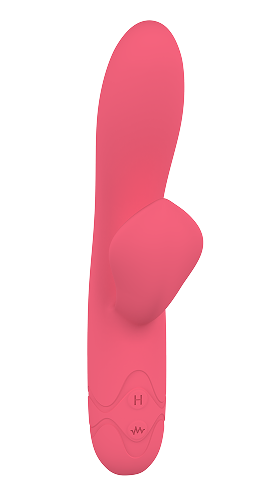
| Feature | HushBullet™ | HushRabbit™ | HushGSpot™ |
|---|---|---|---|
| Best for | Travel, discretion, first-time buyers | Dual (internal + external) stimulation | Targeted, deep G-spot sensation |
| Speeds | 5 | 6 speeds and patterns | 6 |
| Motors | Single | Twin, independently controlled | Single, contoured for placement |
| Casing | Medical-grade silicone | Silky-soft silicone | Velvety, body-safe silicone |
| Portability | Highest — pocket-sized | Moderate | Moderate |
| Noise design | Sub-audible HushTech™ | Sub-audible HushTech™, dual-motor baffling | Sub-audible HushTech™ |
None of these are "better" in the abstract — they're built for different jobs. Someone shopping primarily for travel and simplicity will usually land on the HushBullet™; someone specifically shopping for combined stimulation will lean toward the HushRabbit™; someone who wants a curved, targeted design will prefer the HushGSpot™.
Motor Power vs. Noise: What the Spec Sheet Doesn't Tell You
It's a common assumption that a more powerful motor automatically means a louder toy, but this isn't strictly true — it's more accurate to say that a more powerful motor is harder to keep quiet, which is a different thing. Two toys with similar vibration intensity can differ significantly in noise level depending entirely on how well that motor's energy is contained, rather than how strong the motor is in the first place.
This matters when comparing spec sheets, because "intensity" and "speed count" are usually listed prominently while noise engineering, if mentioned at all, is often a single line buried in the description. A toy that advertises "10 intense speeds" without any mention of motor housing or acoustic design is telling you it prioritized power messaging over discretion messaging — which may be exactly what you want, or may be a signal to look elsewhere if quiet is your priority.

Practically, this means the most reliable way to judge whether a powerful toy will also be discreet isn't the speed count at all — it's whether the listing or reviews specifically address noise alongside intensity, rather than treating them as separate topics.
Understanding Price Tiers
Vibrator pricing is often confusing because two products at very different price points can look similar in photos. Broadly, price differences usually come down to a few underlying factors rather than "quality" in some vague sense:
| Price Range | What You're Typically Paying For |
|---|---|
| Budget | Simpler motors, hard plastic or thinner silicone, fewer speed settings, minimal noise engineering |
| Mid-range | Solid silicone casings, multiple speeds/patterns, some noise dampening, better battery life |
| Premium | Purpose-built acoustic engineering, medical-grade silicone, more refined motor mounting, longer warranties |
If discretion is your main priority, mid-range and premium tiers are where noise engineering tends to actually show up as a designed-in feature rather than a side effect of using thicker plastic. Budget options can still be perfectly functional, but they're far more likely to skip motor baffling entirely.

It's worth noting that price tiers aren't strictly about brand name — two products can sit in very different price brackets for reasons that have nothing to do with quality, like packaging design, marketing spend, or add-on accessories bundled into the price. The more reliable way to judge where a product actually falls is to look past the price tag itself and check for the specific features discussed above: casing material, published noise data, and motor design language. A mid-priced product that checks all three boxes is often a better buy than an expensive one that's vague on all of them.
Common First-Time Buying Mistakes
Mistake: Buying based on speed count alone
More speeds sound impressive on a spec sheet, but a toy with 3 well-differentiated speeds is often more useful than one with 10 that all feel nearly identical. Read reviews for how distinct the settings actually feel, not just the number.
Mistake: Ignoring size relative to your actual needs
Bigger isn't automatically better, and a size that looks appealing in a product photo isn't always comfortable in practice. First-time buyers in particular often do better starting with a compact, versatile option.
Mistake: Overlooking lubricant compatibility
Silicone toys shouldn't be paired with silicone-based lubricant, since it can degrade the material over time. Water-based lubricant is the safe default for nearly all silicone vibrators.
Mistake: Not checking charging method before buying
USB magnetic charging is common and convenient, but the charging port/cable design varies by brand and isn't always interchangeable. If you already own a charger from another product, don't assume it will fit a new one.
Mistake: Assuming all "rechargeable" claims mean the same thing
Battery life and charge time vary widely even among rechargeable products. A toy that takes 3 hours to charge for 2 hours of use is a very different ownership experience than one that charges in 90 minutes for a full week of typical use — worth checking specifically rather than assuming "rechargeable" is a single standardized spec.
Mistake: Buying without checking noise-specific reviews first
It's easy to get swept up in overall star ratings and skip the step of searching reviews for discretion-specific feedback, especially on a first purchase. This is the single most avoidable mistake if quiet is genuinely your top priority.
Buying Discreetly: What Actually Happens at Checkout
For many first-time buyers, the biggest hesitation isn't the product — it's the process. A few things worth knowing:
- Packaging. Reputable retailers ship in plain, unbranded boxes with no product images or descriptive text on the outside.
- Billing descriptor. Your card or bank statement will typically show a neutral company name rather than anything explicitly describing the product, though it's worth confirming this on the retailer's FAQ or shipping policy page if it's a concern.
- Delivery notifications. If you share an email or household delivery tracking with others, check whether shipping confirmation emails reference the product by name — some retailers use generic order confirmations instead.
- Physical delivery. If you share a mailbox or front desk with others, consider delivery timing and whether a signature is required, since an unexpected package sitting out is a more common privacy concern than anything printed on the box itself.
- Return process. For hygiene reasons, most retailers only accept returns of unopened, unused items. Read the return policy before buying if you think there's a real chance you'll want to send it back.
Accessories Worth Buying Alongside
A few inexpensive add-ons make a meaningful difference in day-to-day ownership, even though they're easy to skip on a first order:
- Water-based lubricant. As covered above, this is the safe default for silicone toys and genuinely improves the experience rather than being optional polish.
- A storage pouch. Keeping a toy in a dedicated soft pouch rather than loose in a drawer protects the silicone surface from dust and lint, and keeps it separate from other items if privacy is a concern.
- Toy-specific cleaner. While mild soap and water works for most silicone toys, a dedicated cleaner is gentler and often more convenient for quick between-use cleaning. We cover this in full in our cleaning and care guide.
None of these are strictly necessary to get started, but they're worth factoring into your first order if you're already checking out, since buying them separately later is more expensive and less convenient than adding them once.
Buying for a Partner or as a Gift
Shopping for someone else adds a layer of guesswork, since you're buying based on assumptions rather than personal preference. A few things make this easier: favor versatile, beginner-friendly designs over highly specialized ones, prioritize a wide range of speed settings so the recipient can find their own preference rather than being locked into intensity you chose for them, and lean toward products with strong general reviews rather than niche or highly specific designs. A compact, quiet, easy-to-use option — like the HushBullet™ — tends to be a safer starting point as a gift than something highly specialized, precisely because it doesn't require guessing at anatomy-specific preferences the way a G-spot or dual-stimulation design does.

It's also worth considering including a gift receipt or noting the retailer's return policy discreetly alongside the gift itself, since preferences here are personal enough that even a well-chosen gift may not be the right fit, and a straightforward way to exchange it removes any awkwardness from that possibility.
When One Isn't Enough: Buying More Than One Type
It's common for buyers to eventually own more than one vibrator, simply because different situations call for different designs — a compact option for travel, and a more specialized one for regular home use, for example. If you suspect this might apply to you, it's often more cost-effective to buy the pieces of a small collection deliberately rather than replacing a single all-purpose toy repeatedly as your preferences become clearer.
A practical starting combination that covers most bases: a compact bullet vibrator for travel, portability, and simplicity, paired with either a dual-stimulation or targeted design for regular home use, depending on preference. This mirrors how the HushVibes lineup itself is structured — the HushBullet™, HushRabbit™, and HushGSpot™ are designed to complement rather than duplicate each other's use case. Buying this way from the outset, rather than trading up piece by piece, also tends to work out cheaper overall, since bundled or multi-item orders often qualify for better shipping value than several separate purchases spread out over time.
Materials Matter as Much as the Motor
Buying decisions often focus heavily on motor and noise, but material safety is just as important and easy to overlook. Medical-grade silicone is non-porous, body-safe, and doesn't harbor bacteria the way porous materials like jelly rubber or some lower-grade plastics can. It's also, as covered earlier, a major factor in noise dampening — so a silicone casing is genuinely doing double duty. For a full breakdown of what to look for (and what to avoid) in materials, see our guide on body-safe materials.
One practical way to check material quality before buying: look for whether a listing specifies "medical-grade" or "body-safe" silicone by name, rather than simply describing a product as "silicone" or "silky-smooth." Genuine silicone has a distinct, slightly matte, warm-to-the-touch feel and doesn't retain strong odors the way lower-grade materials sometimes do — a detail that shows up frequently in reviews if a product falls short of it.
Pros and Cons of Buying Online vs. In-Store
Buying Online
- Discreet packaging and delivery
- Wider selection and easier price comparison
- Access to genuine customer reviews mentioning noise, fit, and durability
- Can't physically test the product before buying
Buying In-Store
- Can sometimes see and touch materials directly
- Staff may answer specific questions in real time
- Less privacy during the purchase itself
- Selection is often more limited than online
Explore the Rest of the HushVibes Guide Library
Frequently Asked Questions
How much should I spend on a quiet vibrator?
Mid-range pricing is usually where noise-specific engineering (like sealed motor housings and dedicated acoustic dampening) starts appearing as a real design feature rather than a side effect of thicker plastic. Budget options can still work well, but they're less likely to have been specifically engineered for quiet.
Is it normal to feel nervous buying a vibrator for the first time?
Yes, this is a common feeling, especially with a first purchase. Sticking to reputable retailers with discreet packaging, clear return policies, and detailed product information can make the process feel more straightforward and less intimidating.
Do I need a waterproof vibrator?
Only if you plan to use it in the shower or bath, or want the convenience of easier cleaning under running water. Waterproofing is a separate feature from noise level and isn't required for standard use.
What's the difference between single-motor and dual-motor vibrators?
Single-motor vibrators concentrate all vibration in one area, while dual-motor designs (like rabbit-style vibrators) target two areas simultaneously with independently adjustable intensity for each. Dual-motor designs are typically larger and can be somewhat louder as a category, though acoustic engineering can offset much of that difference.
Can I use regular lubricant with a silicone vibrator?
Water-based lubricant is generally the safest choice for silicone toys. Silicone-based lubricant can degrade silicone material over time and shouldn't be used with silicone products.
Will my purchase show up on my bank statement?
Reputable retailers typically use a neutral, non-descriptive billing name on statements rather than anything that identifies the specific product purchased. It's worth checking a retailer's FAQ or checkout page to confirm this before ordering if it's a concern.
How do I know what size or type to buy first?
For a first purchase, compact, versatile, single-function designs are generally easier to start with than larger or highly specialized products, simply because they involve fewer variables and less guesswork about personal preference.
What's the best way to buy a vibrator as a gift?
Favor beginner-friendly, versatile designs with a wide range of intensity settings rather than highly specialized shapes, so the recipient has room to find their own preference rather than being locked into someone else's assumptions.
Should I buy based on the number of vibration patterns?
Pattern count is a less reliable indicator of quality than how distinct and useful the actual settings feel. A smaller number of well-differentiated speeds is often more practical than a long list of patterns that feel similar to each other.
Is a longer warranty worth paying more for?
Warranty length can be a useful signal of a manufacturer's confidence in their own build quality, particularly around motor longevity. It's a reasonable factor to weigh, though it shouldn't be the only one.
Should I buy accessories at the same time as the vibrator?
It's generally more convenient to add water-based lubricant, a storage pouch, and a cleaning solution to your first order rather than purchasing them separately later, since it avoids an extra delivery and lets you start using the product properly right away.
How many vibrators does someone typically own?
There's no standard number, but many people eventually own more than one, often a compact travel-friendly option alongside a more specialized design for regular use, since different situations tend to call for different features.
What should I do if the noise level doesn't match what I expected after buying?
Check the retailer's return or exchange policy first, since noise level often can't be fully judged until a product is tried in your actual living space. If a return isn't possible, using the toy on a soft surface like a mattress rather than a hard nightstand, and at lower intensity settings, can meaningfully reduce perceived noise even without the product itself changing.
Shop the HushVibes Collection — Quiet by Design

Key Takeaway
Buying a quiet vibrator comes down to five checkable things — a real decibel rating, silicone casing, sealed/baffled motor design, discreet packaging and billing, and a fair return policy — rather than guessing from marketing language alone. The HushVibes lineup is built to pass all five checks by default: HushBullet™, HushRabbit™, and HushGSpot™ all use HushTech™ acoustic baffling and medical-grade silicone, so the research this guide walks through has already been done for you at the design stage.