


Traveling with Vibrators: TSA, Airlines, and Privacy
Quick answer: Yes, you can travel with a vibrator in both carry-on and checked luggage within the US — the TSA doesn't prohibit them, and agents are trained to screen for security threats, not personal items. It may still appear on an X-ray screen and prompt a manual bag check, which is normal for any battery-powered device, not a sign you've done something wrong. For international travel, rules vary by destination country, so it's worth checking the specific country's customs regulations before you go. Below, we cover exactly what to expect at security, how to pack for discretion, and the international considerations worth knowing about in advance, so you can travel with one less thing to worry about.
What TSA Actually Screens For
It helps to understand what security screening is actually designed to catch, since this explains why personal items like vibrators generally pass through without issue. TSA officers are trained to identify security threats on an X-ray screen — weapons, explosives, prohibited liquids — not to flag personal or intimate items. A vibrator shows up on an X-ray as a battery-powered electronic device with a motor, which is a completely unremarkable, common category of item that includes electric toothbrushes, handheld fans, and countless other everyday electronics.

Officers see an enormous volume of personal items daily and are focused entirely on the security screening task in front of them, not on judging what's in anyone's bag. If an item prompts a manual check, it's typically because of its shape, density, or battery placement on the X-ray image — the same reason a tangle of charging cables or a densely packed makeup bag might also get a second look.
This distinction matters because a lot of the anxiety around this topic comes from imagining screening as a personal judgment process, when it's actually closer to a mechanical pattern-matching task. Officers are looking at a continuous stream of X-ray images and flagging anything that doesn't match an expected shape or density profile — a process that has nothing to do with the nature of the specific item once it's confirmed not to be a security concern.
Does TSA PreCheck or Global Entry Change Anything?
Expedited screening programs like TSA PreCheck primarily change the screening process itself — shoes and light jackets typically stay on, laptops can often stay in bags, and screening lanes tend to move faster overall. They don't change what's scanned inside your carry-on or checked bag, so a vibrator is treated the same way under PreCheck as it would be under standard screening. If anything, faster-moving PreCheck lanes mean less time spent in a queue generally, which some travelers find reduces overall anxiety about the process, even though the underlying screening logic for personal items is unchanged. Global Entry, which is primarily focused on expedited customs and immigration re-entry into the US rather than security screening itself, doesn't meaningfully change this either — it speeds up the re-entry process but doesn't alter what's permissible to bring.

Why This Topic Causes More Anxiety Than It Needs To
It's a genuinely common concern, based on how frequently it comes up in travel and shopping questions, but the anxiety is usually disproportionate to the actual risk. A few reasons this specific topic tends to feel higher-stakes than it is: screening happens in a public space, which makes any interaction feel more exposed than it would in private; it's a topic many people feel some social discomfort discussing even hypothetically, which amplifies the perceived stakes of an unlikely scenario; and there's limited visible information about what officers actually experience day to day, which leaves room for imagining a more dramatic reaction than what typically happens in practice.
In reality, security screening is a high-volume, procedural process, and personal items of every kind pass through it constantly without incident. Understanding the mechanics of the process — X-ray pattern recognition rather than personal judgment — tends to meaningfully reduce the anxiety around this specific worry.
Carry-On vs. Checked Luggage
Both are generally acceptable options within the US, but each comes with different trade-offs worth weighing before you pack. Neither choice is right or wrong — it mostly comes down to which trade-off you'd rather manage:
| Consideration | Carry-On | Checked Luggage |
|---|---|---|
| Screening exposure | Higher — you're present if a bag check occurs | Lower — screening happens without you present |
| Item security | Stays with you the whole trip | Risk of lost or delayed luggage |
| Battery rules | Generally straightforward for standard rechargeable devices | Same standard rules typically apply, but check specific battery type if unusual |
| Packing flexibility | Limited by carry-on size restrictions | More flexible for larger items or accessories |
Many travelers prefer carry-on specifically because it keeps the item with them rather than exposed to lost luggage risk, even though it means being present for a possible manual check. Neither option is inherently "safer" from a screening perspective — the difference is mostly about convenience and control.

Airline-Specific Policies
Beyond TSA (which governs security screening in the US specifically), individual airlines generally don't have policies addressing personal items like vibrators at all — their rules focus on baggage size, weight, and clearly regulated categories like batteries above certain capacities, liquids, or hazardous materials. A standard rechargeable vibrator falls well outside any of these regulated categories in the same way a phone or electric razor does. If you're flying internationally, it's worth noting that airline policy and destination-country customs law are two separate things — an airline may have no issue with an item that a specific country's customs regulations treat differently, which is part of why checking the destination country directly (rather than just the airline) matters for international trips specifically.
How to Pack for Discretion
A few practical choices reduce the odds of an item standing out or prompting unnecessary questions, whether you're going through security or simply want peace of mind while packing:
- Use a dedicated pouch, not the original retail packaging. A plain, soft pouch is less identifiable on an X-ray and more discreet if a bag is opened for any reason than branded retail boxing.
- Avoid burying it under obviously personal items alone. Placing it among general toiletries or electronics (chargers, a hairdryer) rather than isolated in its own compartment can make it read as one more unremarkable item among several similar ones.
- Keep it accessible, not deeply packed. If your bag is selected for a manual check, an item that's easy to locate and remove speeds up the process considerably compared to something buried under layers of folded clothing.
- Consider the shape on an X-ray. Simpler, single-motor shapes tend to read more ambiguously on a scan than large or unusually shaped items, which is one more reason compact designs are often the more travel-friendly choice generally.
- Remove any loose batteries if applicable. Most rechargeable vibrators have sealed, built-in batteries and don't require any special handling, but if your specific device uses removable batteries, packing spares according to standard battery travel guidelines (typically in carry-on, not checked luggage) is worth confirming with your airline.
 The HushBullet™ is a good example of a travel-friendly shape for exactly this reason — compact, simple, single-motor, and small enough to sit naturally among other toiletries rather than standing out as a distinct shape on a screen.
HushBullet™
Compact, pocket-sized, and quiet by design — built for travelers who want something that packs easily and doesn't require thinking twice at security.
Shop the HushBullet™What Happens If Your Bag Is Checked
If your bag is pulled for a manual check, the process is generally quick and routine. An officer will typically open the bag, may ask you (for carry-on items) to point out or remove the item that triggered the check, and visually or physically inspect it before closing the bag back up. Officers are trained to handle this efficiently and professionally, treating it the same as they would checking a laptop, a battery pack, or any other electronic item that reads ambiguously on a scan.

It's worth remembering that this kind of check happens constantly throughout the day for all kinds of ordinary items, which means it's a routine, low-friction part of an officer's job rather than a notable or memorable interaction from their side, even though it can feel more significant from the traveler's perspective. The entire process, from bag being pulled to being cleared, is typically measured in a couple of minutes rather than an extended interaction.
If you'd rather minimize the chance of a conversation about a specific item, you can also request a private screening area, an option available at most security checkpoints for anyone who prefers it for any item in their bag, not specifically for this category of item. This isn't necessary in the vast majority of cases, but it's worth knowing the option exists if it would make the process more comfortable for you personally.
International Travel: What to Check Before You Go
Rules and cultural norms around personal items vary significantly by country, and this is an area where general guidance is less useful than checking the specific destination directly. Some countries have stricter customs regulations around adult products, while others have no specific restrictions at all. Because these laws can change and vary by country in ways a general guide can't reliably track, the most reliable approach is:
- Check the destination country's official customs or border agency website before traveling.
- If traveling for work through an employer or travel agency, their compliance or travel resources may also have relevant country-specific guidance.
- When in doubt, packing discreetly (as covered above) and avoiding declaring the item unless specifically required reduces friction regardless of the exact legal status in a given country.
This guide can't responsibly give country-specific legal guarantees, since customs regulations are genuinely outside the scope of what a shopping and lifestyle resource can verify reliably or keep continuously updated.
It's also worth thinking about layovers separately from your final destination. If your itinerary includes a connection through a country with different customs norms than your origin or final destination, that layover country's regulations can technically apply to items in your possession during the connection, even if you don't formally clear customs there. This is a relatively narrow edge case, but worth a quick check for itineraries with unusual or long connections through unfamiliar destinations.
Battery and Charging Considerations While Traveling
Standard rechargeable lithium-ion or lithium-polymer batteries — the type used in most vibrators — are generally treated the same as those in phones, e-readers, and other small consumer electronics for air travel purposes. It's worth keeping the charging cable easily accessible rather than packed away, since airports and hotels may have limited outlet access, and confirming the device is charged before departure reduces reliance on finding a compatible outlet abroad if voltage or plug types differ from home.
If you're traveling to a country with a different plug standard or voltage than your device's charger supports, a universal travel adapter is generally sufficient for most standard USB-charging devices, since USB charging circuits typically handle a range of input voltages automatically. It's worth confirming this for your specific device rather than assuming, particularly for older or less common charging designs.
Hotel Privacy Considerations
Once you've arrived, hotel-specific privacy comes down to two main factors: wall and door construction, and housekeeping schedules. Hotel wall thickness varies enormously by property age and construction type, so if noise is a concern, using a genuinely quiet toy on a soft surface (the bed rather than a hard nightstand) remains the most reliable approach — the same principle covered in depth in our complete guide to silent vibrators.

For storage during a stay, a dedicated pouch tucked into a suitcase compartment rather than left out on a nightstand or counter keeps the item out of view of housekeeping staff, who typically enter rooms during scheduled cleaning times. Checking your hotel's specific housekeeping schedule (many allow a "do not disturb" setting) gives an added layer of predictability if this is a concern.
Vacation rentals and short-term stays add a slightly different consideration than traditional hotels, since cleaning schedules, key access, and turnover procedures vary more widely by host and platform. If privacy during the stay itself matters, checking a listing's specific cleaning and access policy before booking — most platforms disclose this — can help you choose accommodations that match your comfort level, the same way you might check for other amenities before booking.
Traveling for Different Trip Types
How much of this guide applies most heavily depends somewhat on the kind of trip. A short domestic weekend trip mostly only involves the TSA and packing sections above, since customs and international considerations don't apply. A longer international trip benefits from the full checklist — customs research, layover awareness, and charging/voltage planning — done further in advance rather than the night before departure. Frequent business travel, where packing efficiency matters more than novelty, tends to favor the same compact, simple, travel-dedicated item every trip rather than packing differently each time, which reduces the chance of forgetting something or improvising with unfamiliar packing choices under time pressure.
Common Travel Mistakes
Mistake: Packing it in original retail packaging
Branded boxes are more identifiable both on an X-ray and if a bag is physically opened. A plain, soft pouch is more discreet in both scenarios.
Mistake: Not charging before departure
Arriving with a low battery and no easy way to charge (unfamiliar outlets, voltage differences, a packed cable) is an avoidable inconvenience. A full charge before leaving removes this dependency for at least the first part of a trip.
Mistake: Assuming international rules match domestic ones
US-specific TSA guidance doesn't automatically apply elsewhere. Checking the specific destination country's customs regulations, rather than assuming they're similar, avoids unnecessary risk.
Mistake: Packing a loud, hard-plastic toy for a shared trip
Traveling with roommates, family, or in unfamiliar hotel rooms with unknown wall thickness is exactly the scenario where a genuinely quiet, silicone-bodied toy matters most — this is a situation where discretion research pays off directly.
Mistake: Leaving it out during hotel housekeeping windows
Forgetting to tuck an item away before a scheduled cleaning time is one of the more avoidable privacy risks during travel. A quick check of your room's cleaning schedule, or using a "do not disturb" sign, closes this gap easily.
Mistake: Not researching layover countries on longer itineraries
It's easy to research only the final destination's customs rules and overlook a layover country entirely, particularly on itineraries with extended connections. A quick check of any layover country's general customs stance is a reasonable extra step for less common routes.
Pros and Cons of Packing in Carry-On vs. Checked Luggage
Bringing the earlier comparison table down to the core trade-off, here's the short version if you're deciding quickly:
Carry-On
- Item stays with you the whole trip
- No risk of lost or delayed checked luggage
- You're present if a manual bag check occurs
Checked Luggage
- Screening happens without you present
- More packing flexibility for larger items
- Carries the general risk of lost or delayed luggage that applies to any checked item
Explore the Rest of the HushVibes Guide Library
Frequently Asked Questions
Can airport security see a vibrator?
Yes, it will typically appear on an X-ray scan like any other battery-powered device, but officers are trained to screen for security threats, not to flag personal items specifically. For the full breakdown of what this looks like in practice, see our post on whether airport security can see a vibrator.
Can I travel internationally with a vibrator?
In most cases yes, but rules vary by destination country and can change over time, so it's worth checking the specific country's customs regulations before traveling. See our dedicated post on traveling internationally with a vibrator for more detail.
Do I need to declare a vibrator at customs?
Generally no, in the same way you wouldn't declare most other personal electronics, though this can vary by country. If in doubt, checking the specific destination's customs guidance in advance is the most reliable approach.
Should I pack a vibrator in carry-on or checked luggage?
Both are generally acceptable within the US. Carry-on keeps the item with you and avoids lost luggage risk, while checked luggage means screening happens without you present. Neither is inherently safer from a screening standpoint — it comes down to personal preference.
Will TSA agents say anything if they find a vibrator in my bag?
Generally no. Officers see an extremely high volume of personal items daily and are focused on completing the security screening task, not commenting on the contents of a bag. A manual check, if it happens, is typically brief and routine.
Do lithium batteries in vibrators need special handling for flights?
Standard small lithium-ion or lithium-polymer batteries used in most vibrators are generally treated the same as those in phones or e-readers. Unusually large battery packs or spare batteries carried separately may have additional rules, so checking your specific airline's battery policy is worth doing if your device is unusual in this regard.
Is it better to bring a quiet vibrator when traveling?
Yes, generally. Hotel wall thickness varies widely and is unpredictable in advance, so a genuinely quiet, silicone-bodied toy is a safer default for travel than a louder option, regardless of the specific property you're staying at.
Can hotel staff find a vibrator during cleaning?
It's possible if an item is left out in plain view. Storing it in a dedicated pouch inside a suitcase compartment rather than on a nightstand or counter reduces this significantly, and checking your hotel's housekeeping schedule or using a "do not disturb" setting adds another layer of predictability.
What's the most discreet way to pack a vibrator for a trip?
A plain, soft storage pouch rather than original retail packaging, placed among other toiletries or electronics rather than isolated on its own, and kept reasonably accessible rather than buried deep in a bag, is the most practical combination for discretion.
Do all countries allow vibrators to be brought in?
Rules vary by country and can change over time, so this guide can't provide a reliable country-by-country answer. Checking the specific destination country's official customs resources before traveling is the most accurate way to confirm.
Does TSA PreCheck change how a vibrator is screened?
No — PreCheck changes the screening process itself (shoes and light jackets typically stay on, for example) but doesn't change what's scanned inside your bags. A vibrator is treated the same way under PreCheck as under standard screening.
Can I request a private screening if I'm uncomfortable with a bag check?
Yes, private screening areas are available at most checkpoints for anyone who prefers one, for any item in their bag. This isn't necessary in most cases, but it's an available option if it would make the process more comfortable.
Shop the HushVibes Collection — Quiet by Design

Key Takeaway
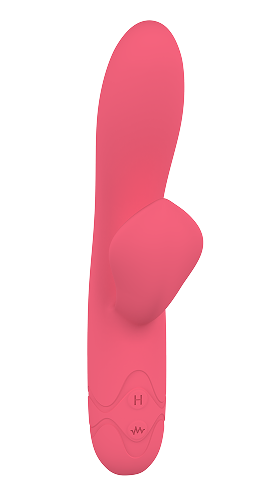
Traveling with a vibrator is generally straightforward within the US — TSA doesn't prohibit them, and a manual bag check, if it happens, is a routine, low-friction process. International travel requires a bit more homework, since rules vary by destination and change over time. Packing discreetly in a plain pouch, keeping the item charged and accessible, and choosing a genuinely quiet, compact design all reduce friction regardless of where you're headed. The HushBullet™ in particular is built for exactly this kind of travel — compact, quiet, and simple — while the HushRabbit™ and HushGSpot™ travel just as easily in a dedicated pouch for longer trips.