


Everything to Know About Body Safe Materials
Quick answer: "Body-safe" means a material is non-porous, non-toxic, and won't harbor bacteria or irritate skin with regular use. Medical-grade silicone is the gold standard and the material to look for by name — it's non-porous, hypoallergenic for most users, phthalate-free, and easy to clean thoroughly. Materials to avoid include "jelly" or rubber-blend toys (often porous and sometimes phthalate-containing), unlabeled "skin-safe" plastics with no material specifics, and anything that doesn't disclose its exact composition. Below, we break down what each common material actually is, how to tell real medical-grade silicone from cheaper blends, and why material choice affects far more than just how a toy feels.
Why Material Safety Isn't Optional
Vibrators come into direct, often prolonged contact with some of the body's most sensitive and absorbent tissue, which makes material choice a genuine health consideration rather than just a comfort preference. Porous materials can trap bacteria in microscopic surface irregularities even after cleaning, since soap and water can't fully reach into pores the way they can a smooth, sealed surface. Some materials also contain chemical additives, like phthalates used as plasticizers, that have raised health concerns with repeated skin contact over time.

None of this is meant to be alarmist — the majority of toys sold by reputable retailers today use body-safe materials. But because regulation of sexual wellness products varies significantly by country and isn't always as strict as it is for other consumer goods, the responsibility for checking material safety often falls more on the buyer than it would with, say, food packaging or children's toys. Knowing what to look for takes only a few minutes and meaningfully reduces risk.
It's also worth separating two related but distinct ideas: material safety and material comfort. A material can feel pleasant against skin in a showroom or unboxing moment while still being a poor long-term choice hygienically. The checks in this guide are aimed specifically at the safety side of that equation, since comfort is usually apparent immediately, while safety concerns like porosity or chemical composition often aren't visible or noticeable until well after purchase.
Why Regulation Varies and What That Means for You
Unlike categories such as children's toys or food-contact products, sexual wellness products aren't uniformly regulated in the same way across every country, and labeling requirements can differ significantly between manufacturers and retailers. This doesn't mean the industry is unregulated everywhere, but it does mean that claims like "body-safe" or "non-toxic" aren't always backed by a standardized, independently verified process the way similar claims might be for other consumer goods.
In practice, this means buyers benefit from treating material claims the way they would treat any other unverified marketing claim: reasonable to trust from an established, reputable brand with a track record and transparent sourcing, but worth double-checking against the practical signals covered later in this guide (specific material naming, texture, odor, and reviews) rather than assuming every claim is independently certified.
The Body-Safe Materials, Compared
Before getting into how to verify quality within a single material category, it helps to see how the major material types stack up against each other at a glance. This is a useful reference point to come back to while comparing specific products, rather than something to memorize all at once.
| Material | Body-Safe? | Notes |
|---|---|---|
| Medical-grade silicone | Yes | Non-porous, hypoallergenic for most users, easy to sterilize, good vibration/sound dampening |
| Borosilicate glass | Yes | Completely non-porous, can be boiled for sterilization, but rigid and breakable if dropped |
| Stainless steel | Yes | Non-porous, very durable, but heavier and less common in vibrating toys specifically |
| ABS hard plastic | Often, with caveats | Non-porous if genuinely medical-grade, but quality varies widely and it's more likely to contain other additives |
| TPE (thermoplastic elastomer) | Depends heavily on grade | Semi-porous in lower grades; look for medical-grade certification specifically |
| "Jelly" rubber / PVC blends | Generally avoid | Typically porous, sometimes contains phthalates, harder to fully clean and sanitize |
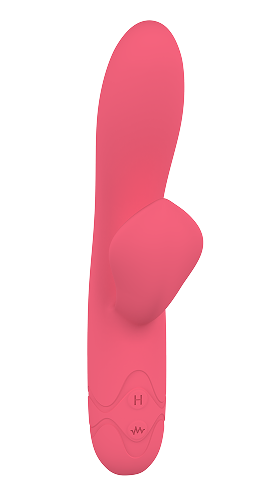
Every HushVibes product — the HushBullet™, HushRabbit™, and HushGSpot™ — is made from medical-grade silicone, which sits at the top of this list for both safety and comfort.
What Makes Silicone the Gold Standard
Not all silicone is the same, which is one of the most commonly misunderstood parts of shopping for body-safe toys. "Silicone" describes a broad family of materials, and quality varies significantly depending on how it's formulated and processed. Medical-grade silicone specifically refers to silicone that meets standards used in medical device manufacturing — the same general category of material used in things like surgical implants and medical tubing, though a sex toy itself isn't a regulated medical device.

Genuine medical-grade silicone has a few consistent characteristics: it's non-porous at a microscopic level, meaning bacteria and residue can't lodge into the surface the way they can with porous materials; it's inert, meaning it doesn't react with body chemistry or leach chemicals into skin over time; and it can typically withstand thorough cleaning, including boiling water in many cases, without degrading. This is also why silicone naturally dampens sound and vibration better than harder plastics — the same molecular density that makes it safe and durable also makes it quieter, which is why our guide to silent vibrators repeatedly points back to silicone as a key factor in noise reduction.
The Manufacturing Difference: How Silicone Grade Is Determined
Silicone quality isn't just about the raw material — it's also about how it's processed and what, if anything, gets blended into it. Lower-cost manufacturing sometimes blends silicone with cheaper filler materials to reduce production cost, which can affect both the surface's porosity and its long-term durability, even though the product may still be labeled "silicone" in a general sense. This is part of why two products can both claim to be silicone while feeling and performing noticeably differently.
Reputable manufacturers typically use 100% pure medical-grade silicone without fillers, which costs more to produce but results in a denser, more consistent, and more genuinely non-porous surface. This is also why price differences between seemingly similar silicone products aren't always arbitrary — a meaningful part of that cost difference can come down to material purity rather than branding or packaging alone.

HushGSpot™
Made entirely from velvety, medical-grade silicone — non-porous, hypoallergenic for most users, and built to be easy to clean thoroughly between uses.
Shop the HushGSpot™Materials Worth Avoiding, and Why
"Jelly" or rubber-blend materials
Often porous at a microscopic level, meaning bacteria can survive standard cleaning even when a toy looks and feels clean on the surface. Some older or lower-cost jelly products have also historically contained phthalates, plasticizing chemicals linked to health concerns with repeated skin exposure.
Unlabeled "skin-safe" plastics
Vague marketing language without a specific material name (like "medical-grade silicone" or "ABS plastic") should be treated as a yellow flag. Reputable manufacturers are generally specific about exact material composition because they have nothing to hide about it.
Low-grade TPE
Thermoplastic elastomer can be manufactured to a body-safe, non-porous standard, but cheaper formulations are more porous and less durable than medical-grade silicone. If a product lists TPE, it's worth looking for a specific certification rather than assuming all TPE is equivalent.
Painted or coated surfaces
Some lower-cost toys apply a soft-touch paint or coating over a different base material to mimic the feel of silicone. These coatings can wear away with use and cleaning, exposing the less body-safe material underneath.
Products with no material information at all
If a listing doesn't mention material composition anywhere — not even a general category — that's a stronger warning sign than a vague claim, since it suggests the manufacturer isn't prepared to disclose what the product is actually made from.
Recycled or repurposed plastics of unknown origin
Occasionally marketed as an eco-friendly feature, but without verified sourcing, the original composition and any additives used in the source material are effectively unknown, which undermines the ability to confirm body-safety at all.
How to Identify Real Medical-Grade Silicone
Since you often can't verify a material claim just by reading a product description, a few practical checks help. None of these require special equipment — they're things you can do with a product listing, a set of reviews, or the item itself once it arrives.
- Check for the specific term "medical-grade" or "body-safe silicone." Vague terms like "silky-smooth material" or "premium skin-friendly finish" without naming the actual material are worth treating skeptically.
- Touch test, if possible. Genuine silicone has a distinct matte, slightly tacky-but-not-sticky texture and feels warm rather than cold to the touch almost immediately, unlike hard plastic.
- Smell test. Quality silicone has little to no odor. A strong plastic or chemical smell, especially one that lingers after unboxing, can indicate lower-grade materials or manufacturing additives.
- Read reviews for material complaints. Reviewers sometimes mention if a product feels "plasticky," develops a sticky residue over time, or has a persistent odor — all signs the material may not be genuine medical-grade silicone.
- Check for phthalate-free labeling specifically. This is a distinct claim from "body-safe" in general and is worth confirming on its own.
Material and Noise: Why This Guide Connects to Sound
Material choice affects more than hygiene and comfort — it's directly tied to how quiet a vibrator is. Hard, thin plastics resonate and amplify motor vibration, acting almost like a small speaker cone, while dense silicone absorbs much of that same vibration before it reaches the outer surface. This is part of why HushVibes builds its entire line around medical-grade silicone paired with HushTech™ acoustic baffling — the material and the motor engineering work together rather than as separate features. 
Material and Lubricant Compatibility
The material a toy is made from also determines what you can safely use alongside it. Silicone toys should be paired with water-based lubricant rather than silicone-based lubricant, since silicone-on-silicone contact can degrade the toy's surface over time, creating a tacky texture or breaking down the material's integrity. Water-based lubricant is compatible with essentially every toy material and is the safest general-purpose choice if you're not sure what else you own. For a full cleaning and maintenance routine by material type, see our guide on cleaning, charging, and caring for your vibrator.
Caring for Silicone to Preserve Its Safety Over Time
Material safety isn't a one-time property fixed at the point of purchase — how a toy is cared for affects how well it maintains those safety characteristics over its lifespan. Even genuinely non-porous silicone can develop a tacky or degraded surface if repeatedly exposed to incompatible substances like silicone-based lubricant or harsh solvents, which can, over time, create micro-damage that behaves more like a porous surface even though the base material started out non-porous.
A simple, consistent routine — cleaning after each use with mild, unscented soap and water or a dedicated toy cleaner, drying fully before storage, and avoiding prolonged contact with other silicone items during storage (since silicone-on-silicone contact can cause materials to stick together or degrade even without lubricant involved) — keeps the material performing the way it was designed to for much longer.

Materials in Different Toy Components
It's easy to assume a product is made of one single material throughout, but many toys actually combine materials — a silicone outer shell over an internal hard plastic or ABS chassis that houses the motor and electronics, for example. This is normal and not a red flag on its own, since the components that matter most for body contact are the outer, skin-touching surfaces, while internal structural components don't come into direct contact with the body at all.
What's worth checking is whether the parts that do touch skin — the outer casing, and in some designs, button covers or seams — are specifically the body-safe material being advertised, rather than assuming the whole product shares one uniform composition. Reputable listings will usually specify this distinction (for example, "medical-grade silicone exterior") rather than leaving it ambiguous.
Allergies and Sensitivities
True allergic reactions to medical-grade silicone are uncommon, since the material is specifically chosen for medical and body-contact applications because of its low reactivity. Most reactions attributed to "toy allergies" are more often caused by lubricant ingredients, residual soap or cleaning product left on the surface, or lower-grade materials rather than silicone itself. If you have known sensitivities to latex specifically, note that most modern silicone toys are latex-free, but it's worth double-checking a specific product's listing if latex allergy is a significant concern for you.
If irritation does occur after using a toy, it's worth methodically ruling out variables one at a time rather than assuming the material itself is the cause: first check the lubricant being used, then confirm the toy has been rinsed thoroughly of any cleaning product residue, and only after ruling those out consider whether the material itself might be the issue. This process of elimination is more reliable than guessing, since lubricant sensitivity is considerably more common than genuine silicone sensitivity.
Certifications and Labels Worth Looking For
Product listings often use several safety-adjacent terms interchangeably, but they don't all mean the same thing. It's worth knowing what each one is actually claiming before treating them as equivalent:
| Label | What It Signals |
|---|---|
| "Medical-grade silicone" | Material meets standards used in medical device manufacturing |
| "Phthalate-free" | Product doesn't contain phthalate plasticizers, a specific chemical concern separate from material type generally |
| "Body-safe" (alone, without other specifics) | A general marketing claim — useful as a starting point, but worth verifying against a named material |
| "Non-porous" | Material doesn't have microscopic gaps that can trap bacteria or residue |
| "Hypoallergenic" | Lower likelihood of triggering allergic reactions, though not a guarantee for every individual |
The most reliable listings tend to use several of these terms together with a named material, rather than relying on just one broad claim on its own. If a listing only says "body-safe" with nothing else specified, it's reasonable to look further or check reviews before assuming it meets the same standard as a product that names its exact material composition.
Common Myths About Toy Materials
Myth: If it feels soft, it's silicone
Softness alone isn't a reliable indicator. Some lower-grade materials are engineered to feel soft to the touch without being non-porous or genuinely body-safe. Always check for a named material rather than judging by feel alone.
Myth: All plastics are unsafe
Hard ABS plastic, when genuinely medical-grade, is non-porous and can be a reasonably safe material, particularly for external components or product housings. It's lower-grade or unspecified plastics that are the actual concern, not plastic as a category.
Myth: A higher price always means safer materials
Price can correlate with material quality, but it isn't a guarantee on its own. The more reliable signal is a specifically named, verifiable material rather than price point alone.
Myth: Cleaning removes all safety concerns regardless of material
Porous materials can retain bacteria at a microscopic level that cleaning can't fully reach, regardless of how thoroughly you clean the visible surface. Material choice affects the ceiling of how clean a toy can actually get, not just how it looks after washing.
Myth: Unscented and hypoallergenic mean the same thing
An unscented product simply has no added fragrance — it says nothing about whether the underlying material is non-porous or unlikely to cause a reaction. These are separate claims worth checking independently rather than assuming one implies the other.
Myth: Internal components need to be body-safe too
Internal structural or electronic components that never contact skin don't need to meet the same body-safety standard as the outer casing. What matters is the material of the parts that actually touch the body during use.
A Quick Materials Checklist
Before buying, run through this shortlist. It only takes a couple of minutes but meaningfully reduces the odds of ending up with a product that's porous, poorly disclosed, or incompatible with the lubricant you already own:
- Is the exact material named specifically (e.g., "medical-grade silicone"), not just described vaguely?
- Is it labeled phthalate-free?
- Does the material feel matte, warm-to-touch, and odorless rather than plasticky or chemical-smelling?
- Do reviews mention material quality specifically, positively or negatively?
- Is the lubricant you plan to use compatible with that specific material?

Explore the Rest of the HushVibes Guide Library
Frequently Asked Questions
What does "body-safe" actually mean?
Body-safe generally means a material is non-porous, non-toxic, doesn't leach harmful chemicals into skin, and doesn't harbor bacteria the way porous materials can. It's a broad term, so checking for a specifically named material like "medical-grade silicone" is more reliable than the label alone.
Is silicone really better than plastic?
Genuine medical-grade silicone is generally considered safer and more comfortable than plastic for body contact, since it's non-porous, hypoallergenic for most users, and doesn't resonate sound the way hard plastic does. That said, genuinely medical-grade ABS plastic can also be non-porous and safe — the bigger concern is unspecified or lower-grade plastic.
What materials should I avoid in a vibrator?
Jelly rubber, PVC blends, and unlabeled "skin-safe" plastics without a specifically named material are generally worth avoiding, since these are more likely to be porous, harbor bacteria, or contain phthalate plasticizers.
Can silicone vibrators cause allergic reactions?
True allergic reactions to genuine medical-grade silicone are uncommon, since the material is specifically chosen for its low reactivity. Reactions are more often caused by lubricant ingredients or residual cleaning product rather than the silicone itself.
What lubricant is safe to use with silicone toys?
Water-based lubricant is the safe default for silicone toys. Silicone-based lubricant should be avoided with silicone products, since it can degrade the material's surface over time.
How can I tell if silicone is medical-grade?
Look for the specific term "medical-grade silicone" in the product description rather than vaguer language. A matte, slightly warm-to-touch texture with little to no odor is also a good practical sign, along with reviews that don't mention a sticky or plasticky feel.
Are phthalates dangerous?
Phthalates are plasticizing chemicals that have raised health concerns with repeated skin exposure over time, which is why "phthalate-free" is a specific label worth checking for separately from general "body-safe" marketing claims.
Does material affect how quiet a vibrator is?
Yes. Dense silicone absorbs vibration and sound better than hard plastic, which tends to resonate and amplify motor noise. Material choice is one of the more reliable visual cues for predicting a quieter toy.
Is glass or metal safer than silicone?
Glass and stainless steel are also non-porous and body-safe, and some people prefer them for their firmness and easy sterilization. They're generally heavier, more rigid, and (for glass specifically) breakable if dropped, which is why silicone remains the more common choice for vibrating toys specifically.
Can I sterilize a silicone vibrator by boiling it?
Many genuine medical-grade silicone toys can tolerate boiling water for sterilization, but this depends on the specific product's electronic components, since motorized toys generally shouldn't be fully submerged unless specifically rated as waterproof. Always check manufacturer care instructions before boiling any toy with internal electronics.
Do internal components need to be made of body-safe material too?
No — only the parts that actually contact skin, typically the outer casing, need to meet body-safe standards. Internal structural or electronic components that stay fully enclosed don't require the same material classification.
Is it normal for a new silicone toy to have a slight smell out of the box?
A very faint, neutral smell immediately after unboxing isn't unusual and often fades after the first wash. A strong, persistent chemical or plastic odor that doesn't diminish after cleaning is more likely a sign of lower-grade material and worth noting in a review or, if concerning, raising with the retailer.
Shop the HushVibes Collection — Medical-Grade Silicone Throughout

Key Takeaway
Body-safe means non-porous, non-toxic, and free of chemical additives like phthalates — and medical-grade silicone is the clearest, most reliable material to look for by name. Every HushBullet™, HushRabbit™, and HushGSpot™ is made entirely from medical-grade silicone, so the material research this guide walks through has already been built into every HushVibes product by default.