


Choosing the Right Vibrator for Your Lifestyle
Quick answer: The right vibrator isn't the one with the most features or the highest star rating — it's the one that fits how and where you actually live. A traveler needs something compact and quiet; someone in a shared household needs discretion above intensity; someone exploring solo for the first time usually does best with a simple, versatile design rather than a highly specialized one. Below, we break down the most common lifestyle profiles, what each one should prioritize, and how to match features to your actual daily life rather than a generic bestseller list.
Why "Best Vibrator" Isn't a Useful Question
Most "best vibrator" roundups rank products by popularity or star rating, which tells you what worked well for the average reviewer — not what will work well for your specific life. Two people can buy the exact same highly-rated toy and have completely different experiences with it, simply because one lives alone with total privacy and the other shares a thin-walled apartment with two roommates.

A more useful question than "what's the best vibrator" is "what does my situation actually require." That reframe changes which features matter. Noise, size, portability, and simplicity move up or down in priority depending on your living situation, relationship status, travel habits, and experience level — and getting those right matters more than chasing the highest speed count or the longest feature list.
This is also why review-based rankings can be genuinely misleading for lifestyle fit specifically. A reviewer writing from a private house with no shared walls has no reason to mention noise at all, even if the product they're reviewing happens to be quite loud — because it simply never came up as a factor for them. Their five-star review is honest, but it's answering a different question than the one you're actually asking.
Start by Identifying Your Lifestyle Profile
Most people fall roughly into one or two of the following categories. It's worth reading through all of them rather than jumping straight to the one that seems obvious, since many people find a second profile applies just as much as the first. Reading through each one briefly, even the ones that don't seem to apply at first glance, also helps you notice priorities you might not have consciously considered — noise, for instance, is easy to underrate if your current living situation happens to be private, even though it may not stay that way indefinitely.
| Lifestyle Profile | Top Priority | Secondary Priority |
|---|---|---|
| Frequent traveler | Portability and discretion | Battery life, travel-safe charging |
| Shared living / roommates | Noise level | Discreet storage and packaging |
| Living with a partner | Ease of use during shared moments | Intensity range for both partners |
| First-time buyer | Simplicity and versatility | Beginner-friendly intensity range |
| Experienced user seeking more | Specific stimulation type (dual, targeted, etc.) | Higher intensity ceiling |
| Family household / thin walls | Noise level | Timing and discreet storage |
| Active, on-the-go lifestyle | Durability and portability | Quick charging, simple cleanup |
Profile: The Frequent Traveler
If you're regularly packing for trips — whether for work or pleasure — portability and discretion matter more than almost anything else. Look for a compact size that fits easily into a toiletry bag, a casing material that won't absorb odors or residue during travel, and genuinely quiet operation for hotel rooms with unpredictable wall thickness. Battery life matters too, since charging outlets and adapters aren't always convenient on the road.
It's also worth thinking about how the product travels when it's not in use. A hard plastic case can rattle in a bag and draw unwanted attention at security or during a bag check, while a soft, padded pouch stays quiet and blends in with other toiletries. Similarly, single-button controls are more travel-friendly than app-connected or Bluetooth-paired designs, which can be finicky to reconnect in unfamiliar settings or when you're short on time.
 The HushBullet™ is built almost entirely around this profile — pocket-sized, sub-audible HushTech™ acoustics, and simple single-button control that doesn't require reading a manual in an unfamiliar hotel room. For everything else related to travel logistics specifically (TSA, airline rules, packing tips), see our dedicated travel guide.
Profile: Shared Living or Roommates
If you live with roommates, in a dorm, or in an apartment with thin walls, noise level should be treated as a hard filter rather than a preference — check for it before comparing anything else. Beyond the toy itself, think about storage: a drawer that's shared or frequently accessed by others is a different situation than a private one, and a discreet pouch or case can matter as much as the product's own design.

Timing also plays a role here in ways that are easy to overlook. Using a toy during naturally louder background moments — music, a shower, a TV on elsewhere — adds a layer of privacy that the product alone can't provide. It's worth thinking through your specific living arrangement too: a roommate who works irregular hours or comes and goes unpredictably calls for more caution than one with a fixed, predictable schedule, since you can't always plan around when the space will genuinely be private.
For the full breakdown of what actually makes a vibrator quiet and how to evaluate noise claims, see our complete guide to silent vibrators.
HushBullet™
Built for exactly this situation — sub-audible HushTech™ acoustics, compact enough to store discreetly, and simple enough to use without any learning curve.
Shop the HushBullet™Profile: Living With a Partner
Shopping for shared or partnered use shifts priorities slightly. Ease of use matters more here than in solo scenarios, since a toy that's genuinely simple to hand off or operate together removes friction during shared moments. A wide, adjustable intensity range also matters more, since two people rarely share identical preferences, and independently adjustable dual-motor designs can accommodate both partners' preferences without needing to compromise on one setting.
Comfort during handling is also worth factoring in specifically for partnered use — a design that's easy to grip and control from an angle other than your own perspective (since a partner will often be operating it from a different position than you would yourself) tends to work better in practice than one designed purely around solo ergonomics. Simple, intuitive button placement matters more here than it might for solo use, where you already know your own device by feel.
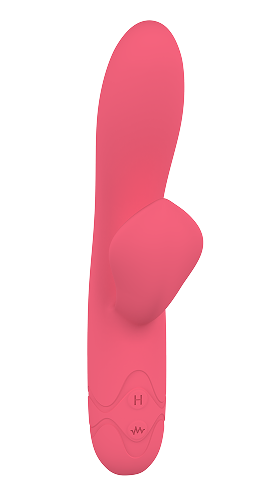
 The HushRabbit™ fits this profile particularly well, since its twin independently-controlled HushTech™ motors let each area of stimulation be adjusted separately rather than forcing a single shared intensity setting.
Profile: First-Time Buyer
If this is a first purchase, simplicity is worth prioritizing over specialization. A highly specific design (targeted G-spot curvature, dual-motor combinations, or complex pattern menus) asks you to already know your own preferences in detail, which is exactly what a first purchase is meant to help you discover. A compact, single-motor, easy-to-control option gives you a clearer baseline to compare future purchases against.

It's also worth prioritizing a wide but simple intensity range — several clearly distinct speeds rather than a long list of similar-feeling patterns — so you can actually locate your own preference rather than guessing between options that all feel roughly the same. Resist the urge to buy based on the longest feature list; for a first purchase specifically, fewer, more distinct options are more useful than many overlapping ones, since your goal is learning your own preferences quickly, not exploring every possible variation at once.
Profile: Experienced User Seeking More
If you already know your preferences well, lifestyle fit shifts from "what's simple" to "what's specific." This is where dual-stimulation or anatomically targeted designs become more relevant, since you're no longer using a first purchase to establish a baseline — you're refining toward a particular type of sensation you already know you like. At this stage, it's reasonable to prioritize a narrower, more specialized feature set over broad versatility, since you're optimizing for a known preference rather than exploring an unknown one.
 The HushGSpot™, with its ergonomically curved design built for deep, targeted pressure, is a good example of a specialized choice that makes more sense once you already know that specific type of sensation is what you're after, rather than as a general first purchase.
Profile: Family Household or Thin-Walled Home
This overlaps with the shared-living profile but deserves its own note, since family households often add scheduling constraints that roommate situations don't — shared routines, children's bedtimes, or unpredictable movement through common areas. Noise level remains the top filter, but discreet storage and timing become just as important here, since the risk isn't only being heard, but being interrupted or having a drawer opened unexpectedly.
A locked or at least clearly personal storage space is worth considering more seriously in this profile than in others, simply because family homes tend to have more shared or communal storage by default. Choosing a toy with a genuinely quiet operating volume also reduces reliance on perfect timing, since family schedules are often less predictable than a roommate's daily routine.
Profile: Active, On-the-Go Lifestyle
If your daily life involves a lot of movement, travel, or unpredictable schedules, durability and quick charging matter more than they would for someone with a stable, predictable routine. Look for a toy that charges quickly rather than one that requires several hours before it's usable again, and consider how easy cleanup is when you don't always have a lot of uninterrupted time.
This profile often overlaps with the frequent traveler profile, but the emphasis is slightly different: travel-specific priorities center on packing and discretion in unfamiliar places, while an active, on-the-go lifestyle is more about fitting use into an unpredictable daily schedule at home. A design with a short charge-to-use ratio and simple, one-step cleaning (rinse under water, wipe dry) tends to fit this pace of life better than something requiring longer charge times or more involved maintenance.

How Experience Level Changes What You Need
Lifestyle isn't only about geography and living situation — how much experience you already have with vibrators changes what "the right one" means just as much. Someone buying their first toy is essentially running a small experiment: they're trying to learn what intensity, stimulation type, and pattern style they actually respond to. A highly specialized product short-circuits that discovery process by assuming answers you don't have yet.
Someone with more experience is in the opposite position — they already have data on their own preferences from prior use, so a specialized design isn't a gamble, it's a refinement. This is part of why the same "best vibrator" recommendation can be genuinely right for one shopper and wrong for another, even if both are otherwise similar in living situation and budget. Experience level is worth treating as its own filter, separate from lifestyle circumstances like travel or shared housing.
Signs You've Outgrown Your Current Vibrator
If you already own a vibrator and are considering a second purchase, a few signs suggest it's less about needing a replacement and more about your preferences having become more specific over time:
- You consistently gravitate to the highest intensity setting and wish there were more range above it.
- You find yourself wanting two types of stimulation at once, rather than switching between separate moments.
- You've identified a specific shape, angle, or placement that consistently works better for you than what your current toy offers.
- Your current toy was chosen primarily for a past circumstance (a shared dorm, a trip) that no longer applies to your day-to-day life.
Any of these are reasonable signals to shop for a second, more specific product rather than replacing your first one outright — many people end up keeping both, using each for a different situation.
Matching Features to Priorities
Once you've identified your profile (or profiles — many people are a mix of two), it helps to translate that into concrete features to filter for while shopping:
If discretion is your top priority
- Published decibel rating under 50 dB
- Silicone casing over hard plastic
- Compact size for easy storage
- Simple, single-button controls
If versatility is your top priority
- Multiple clearly distinct speed settings
- Independently controlled dual motors, if applicable
- Comfortable for both solo and partnered use
- Strong general (not niche) reviews
If you're buying for a specific, known preference
- A shape or curvature matched to that specific preference
- Reviews that specifically describe the sensation type, not just overall satisfaction
- A higher intensity ceiling, if that's part of your preference
If your schedule is unpredictable or active
- Fast charging time relative to usage time
- Simple, quick cleanup (rinseable, non-porous silicone)
- Durable build that tolerates being packed or moved often
A Simple Decision Framework
If you've read through the profiles above and still aren't sure where you land, this shorter framework can help narrow things down quickly:
- Is noise a hard constraint? If you share walls with anyone, answer yes and treat it as your top filter before anything else.
- Do you already know your specific preferences? If not, favor a simple, versatile design over a specialized one.
- Will you realistically travel with it often? If yes, weight portability and battery life more heavily. If it's occasional, treat this as secondary.
- Is this for solo use, shared use, or both? Shared use benefits from wider, independently adjustable intensity ranges.
- What's your budget range? Decide this before comparing individual products so you're comparing similar tiers rather than very different price points.
Answering these five questions in order, rather than jumping straight to browsing products, tends to narrow the field to one or two realistic options far faster than scrolling through a general bestseller list.
Common Lifestyle-Fit Mistakes
Mistake: Buying for the life you want, not the one you have
It's easy to buy a highly specialized product because it looks appealing, even if your actual living situation calls for something simpler and quieter. Being honest about your current walls, roommates, and routine leads to a better first purchase than buying aspirationally.
Mistake: Ignoring how often you'll realistically travel with it
If travel is occasional rather than frequent, portability can be a secondary rather than primary filter. Overweighting travel-readiness for a mostly-at-home lifestyle can mean sacrificing intensity or specific stimulation type you'd otherwise prioritize.
Mistake: Assuming a partner's preferences match your own
When buying for shared or partnered use, it's worth discussing preferences directly rather than assuming they'll align with what worked for you individually. A wider, independently adjustable intensity range accounts for this without requiring a perfect guess upfront.
Mistake: Optimizing for features you won't actually use
A long list of vibration patterns sounds appealing on a spec sheet, but if you realistically gravitate toward one or two settings, that complexity adds cost and learning curve without adding real value to your day-to-day use.
Mistake: Not accounting for how your situation might change
A lifestyle profile isn't necessarily permanent — moving, a new relationship, or a change in living situation can shift priorities. It's reasonable to buy for your current situation rather than trying to future-proof a single purchase against every possibility, since a second product later is usually simpler than compromising now.
Mistake: Letting price be the only tiebreaker
When two options both seem like a reasonable lifestyle fit, defaulting to whichever is cheaper can mean missing a meaningful difference in noise engineering or material quality that a slightly higher price reflects. Re-check the actual features before letting price alone decide.
Pros and Cons of Shopping by Lifestyle vs. by Bestseller List
Both approaches are reasonable depending on how much time you want to spend before buying — it's less about one being universally correct and more about which trade-offs you're comfortable with.
Shopping by Lifestyle Fit
- Higher chance the product actually gets used regularly
- Avoids buying features that don't apply to your situation
- Requires a bit more upfront thought before purchasing
Shopping by Bestseller List
- Faster, less research required
- Reflects what worked for the average buyer, not necessarily you
- Higher risk of mismatch with your specific noise, size, or use-case needs
In practice, a reasonable middle ground is using bestseller and review data as a starting shortlist, then applying the lifestyle framework above to narrow that shortlist down to the option that actually fits your specific situation — rather than treating either approach as the whole process on its own.
Explore the Rest of the HushVibes Guide Library
Frequently Asked Questions
What's the best vibrator for someone who travels a lot?
A compact, quiet, single-motor bullet vibrator is generally the best fit for frequent travel, since portability, discretion, and simple controls matter more than a wide feature set in unfamiliar environments like hotel rooms.
What's the best vibrator for someone living with roommates?
A toy with a published decibel rating under 50 dB, a silicone casing, and discreet, compact storage is the best fit for shared living situations, where noise level should be treated as a hard requirement rather than a preference.
Should first-time buyers choose a simple or advanced vibrator?
Simple, versatile designs are generally better for first-time buyers, since highly specialized products assume you already know specific preferences that a first purchase is typically meant to help you discover.
What's the best vibrator for partnered use?
Designs with independently adjustable dual motors tend to work best for partnered use, since they allow each area of stimulation to be tailored separately rather than forcing a single shared intensity setting.
Do I need a different vibrator for home use versus travel?
Not necessarily, but many people find it useful to own one compact, quiet option specifically for travel and simplicity, alongside a more specialized design for regular home use where noise and portability are less constrained.
How do I know if I need a dual-stimulation vibrator?
Dual-stimulation designs are generally a better fit once you already have a clear sense of your own preferences, rather than as a first purchase, since they combine two specific types of sensation rather than offering a simpler, single-focus starting point.
Is portability really that important if I mostly use it at home?
If travel is infrequent, portability can reasonably be a secondary consideration rather than a primary one, freeing you to prioritize intensity, specific stimulation type, or other features that matter more for a mostly-at-home lifestyle.
What should someone with a thin-walled apartment prioritize?
Noise level should be the top filter, followed by discreet storage. A silicone-bodied vibrator with a published decibel rating under 50 dB, used on a soft surface rather than a hard nightstand, is the most reliable combination for thin-walled homes.
Can one vibrator really fit multiple lifestyle needs?
A versatile, compact, quiet design can reasonably cover several lifestyle profiles at once — travel, shared living, and first-time use, for example — though highly specific needs (like targeted G-spot stimulation) are generally better served by a more specialized second product.
How often do people's preferences change after their first purchase?
It's common for preferences to become clearer with experience, which is part of why starting with a simple, versatile first purchase tends to work out better than committing to a highly specialized design before you know exactly what you're looking for.
What if my lifestyle fits more than one profile?
This is common — many people are, for example, both a first-time buyer and someone living with roommates at the same time. In that case, prioritize whichever factor is the hardest constraint (usually noise level, if a shared living situation applies) and treat the rest as secondary preferences to weigh once that filter has narrowed your options.
Should I buy a more expensive vibrator if I'm not sure what I like yet?
Not necessarily. A simpler, mid-range option is often more useful for a first purchase than an expensive, highly specialized one, since the goal at that stage is learning your own preferences rather than optimizing for a preference you haven't identified yet.
Shop the HushVibes Collection — Quiet by Design
Key Takeaway
The right vibrator depends far more on your actual lifestyle — where you live, who's around, how often you travel, and how experienced you are — than on star ratings or feature counts. Matching your profile to the right priorities (noise, portability, versatility, or specific stimulation type) leads to a purchase you'll actually use, rather than one that looked good in a bestseller list. The HushVibes lineup is built around exactly these distinctions: the HushBullet™ for travel and simplicity, the HushRabbit™ for shared or dual-stimulation use, and the HushGSpot™ for targeted, experienced use — all engineered quiet by default.