
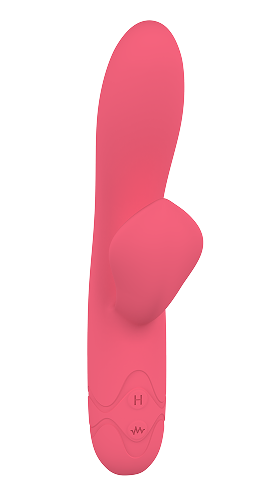


What Is a Silent Vibrator and How Quiet Are They?
If you've ever hesitated before pressing "on" because you weren't sure who might hear, you're not alone. It's one of the most common reasons people put off buying a vibrator in the first place, or end up leaving one in a drawer instead of actually using it. It's also exactly what silent vibrator technology was built to solve.
The good news is that "quiet" and "powerful" aren't opposites anymore. Modern engineering has closed that gap, and understanding how is the first step to buying something you'll actually feel comfortable using, wherever you are.
The Short Answer
A silent vibrator isn't literally silent, nothing with a motor truly is, but it's engineered to keep sound low enough that it won't carry past a closed door. Instead of the sharp, buzzy whir you'd expect from a standard toy, the vibration is tuned to a deeper, duller frequency that's much harder for the human ear to pick up, especially through walls, blankets, or ambient household noise.

The difference usually comes down to motor design and internal baffling. Cheaper vibrators use exposed, high-RPM motors that vibrate directly against thin plastic, which acts almost like a tiny speaker cone and amplifies the noise outward. Quiet vibrators take the opposite approach: internal sound dampening, structural padding, and denser casing absorb that vibration before it ever turns into audible buzz. That's the same basic idea behind our HushTech™ acoustics, which we build into every product in the Hush line rather than treating quiet design as an afterthought.
How Quiet Is "Quiet," Actually?
Most silent vibrators sit somewhere around 40 to 50 decibels on their highest setting, roughly the volume of a quiet conversation or a humming refrigerator. For comparison, a standard vibrator can easily hit 60 to 75 decibels, which is closer to a running vacuum cleaner or a blender on a low setting. That gap might not sound like much on paper, but in practice it's the difference between "audible from the next room" and "you'd have to be standing right outside the door, listening closely, to notice anything at all." It also matters where in the vibration cycle that noise happens. Many quiet vibrators are loudest for a split second at startup and then settle into a much lower hum, which is part of why real-world testing in an actual room tells you more than a spec sheet ever could.
If you want the full breakdown of decibel ranges, how they're measured, and what they actually sound like in real bedrooms and apartments, we go much deeper in our complete guide to silent vibrators.

It's Not Just About the Motor
A few other things affect how much sound actually escapes a room: what surface the toy is resting on, how thick your walls are, and even the material the toy itself is made from. A vibrator sitting directly on a hard nightstand or hollow bed frame will transmit far more sound than one used against soft bedding, simply because hard surfaces conduct vibration more efficiently than soft ones. Material choice plays a role too. Soft, medical-grade silicone tends to absorb vibration internally better than hard plastic shells, which means two toys with the exact same motor can sound noticeably different depending on what's wrapped around it. We've put together a separate piece on how loud the average vibrator actually is if you want real-world decibel comparisons across different toy types and price points.
Why This Matters More Than People Admit
Living with roommates, family, or thin apartment walls shouldn't mean putting your own pleasure on hold, and it definitely shouldn't mean rushing through something that's supposed to feel good. Quiet design isn't a gimmick or a marketing buzzword, it's what actually makes it possible to relax into the moment instead of half-listening for footsteps outside your door or a knock you're dreading. This is especially true for anyone in a dorm, a shared apartment, thin-walled housing, or simply a household where privacy is limited. If discretion is a top priority for you, it's worth reading why some vibrators are so much quieter than others to understand exactly what design details to look for before you buy, rather than relying on marketing claims alone.

The Bottom Line
Silent vibrators won't make zero sound, and any brand claiming otherwise is stretching the truth. But the good ones make little enough that discretion stops being something you have to think about mid-use. You get to focus on how it feels instead of how loud it is, which is really the whole point of buying one in the first place.
Shop the Hush Collection
 HushBullet™ |
 HushRabbit™ |
 HushGSpot™ |